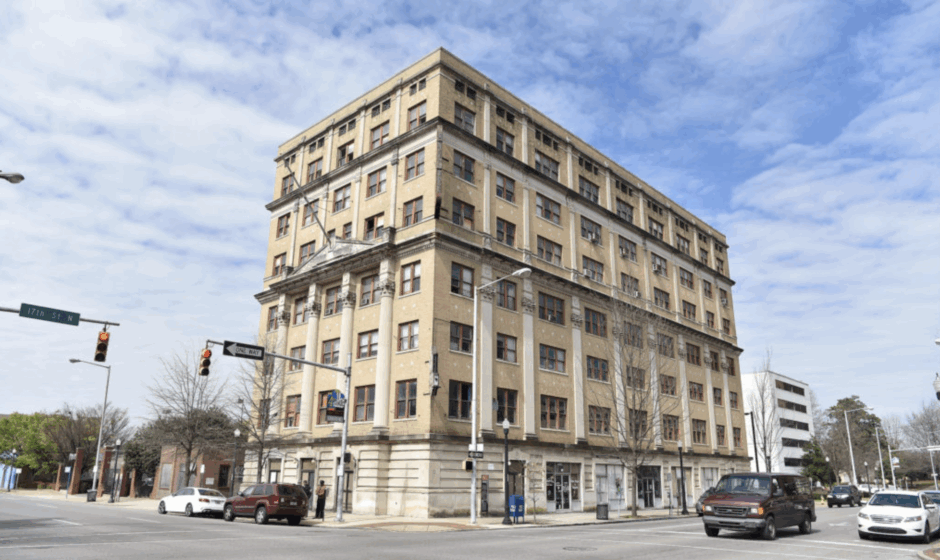

The Prince Hall Masonic Temple, once a thriving center for Black businesses and community life, is set to undergo a major restoration.
A Landmark of Black Entrepreneurship
Located in Birmingham’s Civil Rights District, the Renaissance Revival-style building was designed in 1922 by Robert Robinson Taylor, the first Black architect in the United States. Known as the “Black Skyscraper,” the eight-story temple offered office space to Black professionals and organizations during the Jim Crow era. Tenants included the NAACP and the Booker T. Washington Library, which was the first library in Birmingham to welcome Black patrons. Beyond its role as a Masonic temple, it provided dental and medical offices, workspaces for seamstresses and cobblers, and entertainment options such as a bowling alley and pool hall. Its 2,000-seat auditorium allowed African Americans to choose their seats, which was a rare freedom at the time.
Decline and Closure
Economic downturns eventually led to the temple’s closure in 2011. For decades, however, it had served as a safe and empowering space for Birmingham’s Black community. Leaders recall that it was a place where people could enter through the front door with dignity, find professional services, and connect socially. The building’s history continues to inspire efforts to restore it to its former prominence.
Revival Efforts Underway
The planned restoration is expected to take three years and cost more than $30 million. Developers aim to preserve as much of the original structure as possible while revitalizing its role as a hub for community services. Just as the Black community raised $658,000 in 1922 to build it, today’s leaders see the project as an opportunity to give back and honor its legacy. Supporters believe the renovation will restore a historic building and revive its century-old mission of service, opportunity, and pride.
Sign up for the Homely Birmingham newsletter to stay up to date on Birmingham.