
Birmingham’s population has declined overall in recent years, but growth persists in select neighborhoods, highlighting a city in transition.
Shrinking and Growing Neighborhoods
According to recent U.S. Census Bureau estimates, Birmingham lost roughly 14,000 residents between 2019 and 2024, bringing its population down to about 196,000. However, some neighborhoods bucked the overall decline.
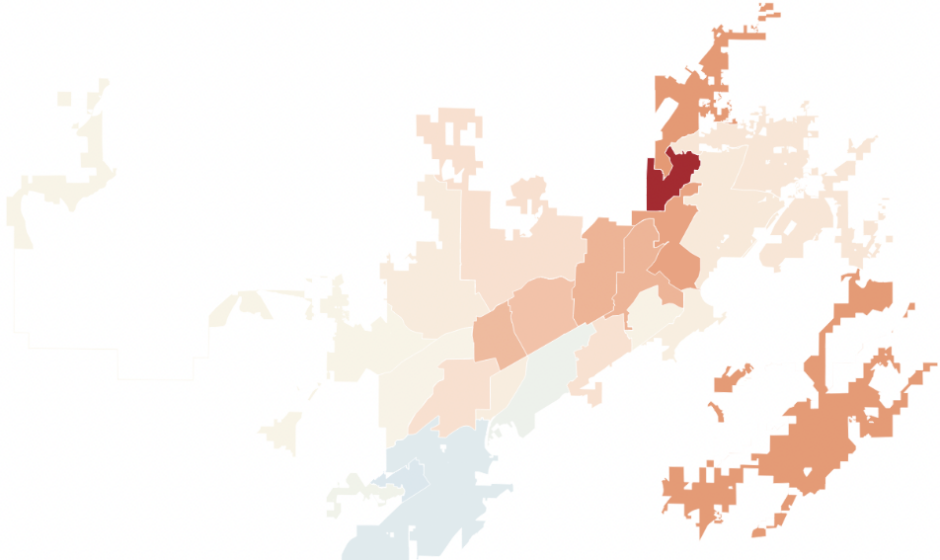
Southwest Birmingham saw the most growth, with Oxmoor adding nearly 900 residents, Bush Hills about 500, and Liberty Highlands and Five Points South roughly 450 each. Smaller gains occurred in South Titusville (350) and Roebuck (250). The fastest-growing neighborhood by percentage was Dolomite, increasing around 28% with 178 new residents.
Conversely, neighborhoods losing the most people included Overton (down 1,600), Echo Highlands (down 1,000), and Woodlawn (down 750). Communities on the city’s east and north sides, such as East Lake, Northside, East Pinson Valley, and Cahaba, also experienced declines of over 1,000 residents each.
Community-Level Trends
While some neighborhoods grew, most communities saw population losses. Of Birmingham’s 23 communities, only four added residents: Southwest (+730), Southside (+500), Grasselli (+100), and Brownville (<50). Growth was largely concentrated in the southwestern part of the city.
Bigger Picture
Despite the city’s population decline, the greater Birmingham Metro Area remains Alabama’s largest population center, with roughly 1.2 million residents, and continues to grow.
These estimates, drawn from the Census Bureau’s small-area data, provide a snapshot of neighborhood-level trends, though they should be viewed as approximate rather than exact figures.
Sign up for the Homely Birmingham newsletter to stay up to date on Birmingham.